Planting and watering seeds for His Harvest

April 13, 2012

A Bit of Laughter (and Word) to Brighten Your Day!


A preacher got caught in a flood and was standing on top of his church, with water up to his ankles, praying.

A man came by in a boat and said "Come on Preacher and I'll take you to dry land." The preacher smiled and said "No thank you son, I have faith in The Lord and The Lord will provide."

The rain kept falling and the waters kept rising and when it reached the preachers waist another man in a boat came by and said "Get in Preacher and I'll take you to dry land." Again the preacher smiled and said "No thank you son, I have faith in The Lord and The Lord will provide."

The rain kept falling and the waters kept rising and when it reached the preachers chest a helicopter came by and said "Climb in Preacher and we'll take you to dry land." The preacher cried "No thank you my son. I am a man of great faith and I have faith that The Lord will provide."

The rain kept falling and the water kept rising and the preacher drowned and went to Heaven.

When he came before The Lord he said "Father, I don't understand. I put all my faith in you, why did you let me drown?"

God looked at him for a moment, smiled and said "I sent you two boats and a helicopter, what else did you want me to do?"


Although funny, that joke does have a serious message: we need to be sensitive to God's timing and His work in our lives.

People regularly miss God's hand in their lives, and we don't always recognize His work when it comes in a form we don't expect.

Jesus teaches us that we should look to God each day for the bread - the help and sustenance - we require. The Lord’s invitation to seek daily bread from our Heavenly Father speaks of a loving God, aware of even the small, daily needs of His children and eager to assist them, one by one.

How can we better recognize the hand of God moving in our lives? We must familiarize ourselves with God’s Word that tells us about who God is and what He does. Reading His Word helps us to understand how God works and how we should respond to Him:

All the Holy Writings are God-given and are made alive by Him. Man is helped when he is taught God’s Word. It shows what is wrong. It changes the way of a man’s life. It shows him how to be right with God. It gives the man who belongs to God everything he needs to work well for Him. 2 Timothy 3:16-17


We must also communicate with God through prayer. We can ask for wisdom to help us recognize, submit to, and learn from Him:

If you do not have wisdom, ask God for it. He is always ready to give it to you and will never say you are wrong for asking. James 1:5

And, we must trust God. Just as a son often rebels against the guidance of his father - not trusting his father's judgment - so do we often fight against God: "Why did You allow this? Why must I do that? Isn't there another way?"

We should be careful not to doubt God’s goodness or the quality of His plan. Many times in our lives, we make an ordeal worse by not trusting and obeying God:

Trust in the LORD with all your heart and lean not on your own understanding; in all your ways submit to him, and he will make your paths straight. Proverbs 3:5-6


April 7, 2012

He is risen - Jesus, the Firstfruits of God's harvest!


Not only does Jesus fulfill the Feast of Passover with his crucifixion, he also fulfills one of the Lord’s Feasts with his Resurrection!


We all know Jesus rose on a Sunday, but we sometimes miss the actual Scriptural fulfillment that took place.


The Feast of Firstfruits is frequently over-looked today. God commanded His people make a Firstfruits offering to Him on the day after the Sabbath following Passover (remember: the Sabbath is Saturday, so Firstfruits would fall on the Sunday after Passover).

In obedience to His command, the High Priest of Israel would wave the Firstfruits of their barley harvest before the Lord on this day.

The LORD said to Moses, “Speak to the Israelites and say to them: ‘When you enter the land I am going to give you and you reap its harvest, bring to the priest a sheaf of the first grain you harvest. He is to wave the sheaf before the LORD so it will be accepted on your behalf; the priest is to wave it on the day after the Sabbath. Leviticus 23:10-11


Jesus, as High Priest, also fulfilled His father’s command as He rose from the dead on this Feast day:

Early on the first day of the week, (the day after the Sabbath) while it was still dark, Mary Magdalene went to the tomb and saw that the stone had been removed from the entrance… but Mary stood outside the tomb crying. As she wept, she bent over to look into the tomb… At this, she turned around and saw Jesus standing there, but she did not realize that it was Jesus… Jesus said to her, "Mary." She turned toward him and cried out in Aramaic, "Rabboni!" (which means Teacher). Jesus said, "Do not hold on to me, for I have not yet returned to the Father. Go instead to my brothers and tell them, 'I am returning to my Father and your Father, to my God and your God.' John 20:1-17


Jesus is the Firstfruits of God’s harvest! He is depicted as so in many places throughout the New Testament.

But Christ has indeed been raised from the dead, the firstfruits of those who have fallen asleep. For since death came through a man, the resurrection of the dead comes also through a man. For as in Adam all die, so in Christ all will be made alive. But each in his own turn: Christ, the firstfruits; then, when he comes, those who belong to him. 1 Corinthians 15:20-23

He chose to give us birth through the word of truth, that we might be a kind of firstfruits of all he created. James 1:18

These are those who did not defile themselves with women, for they kept themselves pure. They follow the Lamb wherever he goes. They were purchased from among men and offered as firstfruits to God and the Lamb. Revelation 14:4

For those God foreknew he also predestined to be conformed to the likeness of his Son, that he might be the firstborn among many brothers Romans 8:29


Just as the barley was waved before God in Jerusalem for all to see, Jesus also presented the Firstfruits of His harvest before God:

The tombs broke open and the bodies of many holy people who had died were raised to life. They came out of the tombs, and after Jesus’ resurrection they went into the holy city and appeared to many people. Matthew 27:52-53


Jesus... the Firstfruits of God’s harvest!


April 6, 2012

Worthy is the Lamb who was slain...

Worthy is the Lamb who was slain; Holy, Holy is He...

Sing a new song to Him who sits on Heaven's mercy seat.

Holy, Holy, Holy is the Lord God Almighty who was, and is, and is to come...

With all creation I sing Praise to the King of Kings; you are my everything and I will adore you!


April 5, 2012

No fault in Jesus!

This is day 4 of our posts about Passover. You can find our other posts HERE.


All Passover lambs must be examined and found to be perfect and without fault, or defect:

Your lamb shall be an unblemished male a year old; Exodus 12:5


And, after examining Jesus, Pilate declared Jesus without fault:

Therefore, when the chief priests and officers saw Him, they cried out, saying, “Crucify Him, crucify Him!” Pilate said to them, “You take Him and crucify Him, for I find no fault in Him.” John 19:6


Passover Lambs were sacrificed as an offering to God and their bones were not broken:

Your lamb shall be without blemish... Exodus 12:5

They must not leave any of it till morning or break any of its bones. When they celebrate the Passover, they must follow all the regulations. Numbers 9:12


Jesus was crucified for the sins of the world as our personal Savior and none of His bones were broken:

The soldiers therefore came and broke the legs of the first man who had been crucified with Jesus, and then those of the other. But when they came to Jesus and found that he was already dead, they did not break his legs. John 19:32-33

April 4, 2012

Jesus is the Passover!

This is day 3 of our posts about Passover. You can find our other posts HERE.

Passover is always on the 14th day of the month of Nisan. For Gentiles, the date when Passover occurs can sometimes seem a bit confusing. But, the Bible is clear:

The LORD’s Passover begins at twilight on the fourteenth day of the first month

Leviticus 23:5

Unlike the Gregorian calendar that we use, the Jewish people (to this day) keep basically the same Lunar calendar as they did during the time of Christ. Passover always falls on the 14th day of the Jewish month of Nisan. Also worth nothing is that a Biblical day runs from sunset to sunset:

And God said, “Let there be light,” and there was light. God saw that the light was good, and he separated the light from the darkness. God called the light “day,” and the darkness he called “night.” And there was evening, and there was morning - the first day. Genesis 1:3-5


We also know from Scripture that Jesus was crucified on Passover:

“You know that after two days is the Passover, and the Son of Man will be delivered up to be crucified.Matthew 26:2

Now on the first day of Unleavened Bread, when they killed the Passover lamb, His disciples said to Him, “Where do You want us to go and prepare, that You may eat the Passover?” Mark 14:12

Wherever he goes in, say to the master of the house, ‘The Teacher says, “Where is the guest room in which I may eat the Passover with My disciples?” Mark 14:14


On nightfall of the 14th day, Jesus celebrates the Passover with his disciples. During this Feast, Jesus reveals the true meaning of their rehearsals: Jesus shows how his body literally is the Passover.

We have added our own comments (in parenthesis below) to illustrate that the context of what Jesus was saying, at the time, was understood by everyone in the room with Him... sadly, this seems to get missed 2,000 years later:

While they were eating (the Passover), Jesus took bread, and when he had given thanks, he broke it and gave it to his disciples, saying, “Take and eat; this is my body.”(this unleavened bread, which represents sinless-ness in my body. This bread that you have been breaking for 2,000 years - this is the body of the Messiah, which will be broken for you).

Then he took a cup, and when he had given thanks, he gave it to them, saying, “Drink from it, all of you. This is my blood of the covenant, which is poured out for many for the forgiveness of sins (this cup that you have been drinking from on Passover for 2,000 years is My blood)

Matthew 26:26-28


There has been much division over 'Communion' throughout the history of the Church, but in the context of the Truth of Passover, there is no confusion.

Jesus is the bread & the cup of Passover!

Jesus literally is our Passover, as Paul states in 1 Corinthians 5:7:

Get rid of the old yeast, so that you may be a new unleavened batch - as you really are. For Christ, our Passover lamb, has been sacrificed.


Interesting side note about Jesus as the bread: He was born in Bethlehem, which in Hebrew means “house of bread”.


April 3, 2012

Passover 2012 Recipes


~ Passover 2012 - Our Menu ~

Salad:
Field greens with chopped walnuts, apples, red grapes, celery, crumbled goat cheese and balsamic dressing

Main Course:
Lamb: Roasted Herb-Stuffed Leg of Lamb
Unleavened Bread: Matzah
Bitter Herbs: Grated Horseradish
Haroset
Roasted Beets
Bulgur Salad with Cucumber & Red Grapes

Dessert:
Honey-Glazed Pears, over vanilla frozen yogurt


~ Recipes ~


Unleavened Bread - Matzah: The Bread of Affliction
Due to the desired lack of leavening time, you must limit the quantity used in this recipe to 1 cup of flour per batch.

Ingredients (per batch)
1 cup wheat flour (do not heap)
1/3 cup cold water (may have to add an additional tablespoon of water)
Kosher Salt (crushed to the size of table salt)
Olive oil (for anointing the wafters)

Directions (read before beginning)
Preheat oven to 475 and place a heavy baking sheet in the oven so it will become preheated.

Dust a clean work surface and a rolling pin with a little flour.

Add 1 cup of flour into a mixing bowl and set timer for 18 minutes.
Start the timer when you begin to mix. Gradually add the 1/3 cup of water, stirring rapidly with a fork. Form the dough into a ball, and knead until the dough is smooth. This mixing should take under 2 minutes.

Divide the dough into 6 equally sized balls. Flatten each ball between your hands, lightly dust with flour and place on the lightly floured surface.

First roll each ball into a 3-inch pancake shape, and then increase the size of each piece one inch at a time until all the pieces are approximately 6-inches in diameter. Note: Rolling each piece in stages gives the gluten in the dough a chance to relax between rollings, thus making it easier to roll out.

Quickly and uniformly prick each piece of dough 25 times with a fork. Turn each piece over and prick another 25 times. Be sure to make holes, not just indentations. This will help to keep the dough from fermenting before it bakes.

Remove the preheated baking sheet.

With 5 minutes left on the timer, quickly but gently place the flattened rounds of dough on the preheated baking sheet, and place on a rack near the top of the oven. Bake until the matzah is lightly brown and crisp.

Transfer to a wire rack to cool.

Anoint (brush) with olive oil and salt generously like a cracker.


Roasted Herb-Stuffed Leg of Lamb
Note: Ask the butcher to bone & butterfly the leg of lamb.

Ingredients
1/2 cup finely chopped fresh mint
1/2 cup chopped fresh italian parsley
1/3 cup olive oil
6 garlic cloves, minced
1 tablespoon minced fresh rosemary
1 six-pound boned & butterflied leg of lamb (about 7 pounds before boning)
coarse kosher salt and pepper

1/2 cup dry white wine
1/2 cup beef broth or water


Directions
Stir chopped mint and next 4 ingredients in small bowl. Place lamb, boned side up, on work surface. Sprinkle with salt and pepper. Spread herb mixture; roll up from long side, tie at 2-inch intervals. Rub lamb with salt and pepper. Can be made 1 day ahead (cover & chill).

Preheat oven to 450. Place lamb in roasting pan. Roast uncovered until thermometer inserted into thickest part registers 130-135 F for medium-rare, about 50-minutes. Transfer to platter; let rest 15-minutes.

Add wine and broth to pan. Stir up browned bits over high heat. Pour pan juices into small bowl.

Remove strings from lamb; cut crosswise into 1/2-inch thick slices. Serve with pan juices.

Serves: 8


Haroset


Ingredients
4 large apples, peeled, cored and finely chopped (don't use food processor - the apples get too mushy)
1 teaspoon fresh lemon juice
1 cup finely chopped walnuts
4 tablespoons brown sugar
2 tablespoons honey
1 teaspoon ground cinnamon
1/3 cup sweet Passover wine

Directions
Toss the apple with the lemon juice in a mixing bowl. Add the nuts, sugar, honey, cinnamon and wine and toss gently, mixing well.

This can be made a day ahead and kept covered in the refrigerator.

Yield: 4 cups


Roasted Beets

Ingredients
1 1/2 pounds beets (1 bunch)
1 tablespoon olive oil
coarse salt and ground pepper

Directions
Preheat oven 450.

Place beets, scrubbed, peeled and cut into 1/2-inch wedges, on a large piece of foil on a baking sheet. Drizzle with olive oil and season with salt and pepper.

Fold foil around beets and crimp ends to form a packet.

Roast until beets are tender when pierced with a knife, about 25-30 minutes.

Can be easily doubled for more servings.


Bulgur Salad with Cucumbers & Red Grapes

Ingredients
1 cup bulgur wheat
salt and pepper
1/2 bunch cilantro, chopped
1 cucumber, peeled and chopped
1 cup halved seedless red grapes
juice of 1 lemon
2 tablespoons olive oil

Directions
In small saucepan, bring 1 cup water to a boil. Stir in the bulgar and 1/4 teaspoon salt, cover and and let stand until the water is absorbed, about 30-minutes.

Transfer bulgar to a bowl. Stir in the cucumber, grapes, lemon juice, olive oil and cilantro. Season with salt and pepper.

Serves 4.


Honey-Glazed Pears

Ingredients
4 un-peeled pears (any variety)
1/4 cup apple juice
1/4 cup honey
juice of 1/4 lemon
1 teaspoon vanilla
1/4 teaspoon cinnamon

Directions
Preheat oven to 400 degrees.

Cut pears into bite-sized chunks and place them into an 8x8-inch baking pan.

Combine the remaining ingredients in a bowl and pour over pears.

Cover the pears and bake for 20-minutes.

Remove the cover and baste the pears with the pan juices. Bake, uncovered, for an additional 25 minutes or until the pears are tender.

Serve the pears warm or a room temperature over vanilla frozen yogurt and top with chopped nuts if desired.

4 servings.


April 2, 2012

Passover Food: Lamb, Unleavened Bread & Bitter Herbs


Your lamb shall be without blemish, a male of the first year. You may take it from the sheep or from the goats. Now you shall keep it until the fourteenth day of the same month. Then the whole assembly of the congregation of Israel shall kill it at twilight. And they shall take some of the blood and put it on the two doorposts and on the lintel of the houses where they eat it. Then they shall eat the flesh on that night; roasted in fire, with unleavened bread and with bitter herbs they shall eat it. Exodus 12:5-8


According to Scripture, the three elements on the Passover table should be the Passover Lamb, the unleavened bread, and the bitter herbs.

It is important to note that with Jewish tradition, other dishes have been added to the Passover Feast.


~ The Passover Lamb ~

Old Testament meaning:

The lamb speaks of redemption and forgiveness. Among Israel, lamb was sacrificed every year for Passover to atone for the sins of the past year. It is also a reminder of the original Passover lamb from whose blood delivered Israel from death & slavery.

Then tell them, 'It is the Passover sacrifice to the LORD, who passed over the houses of the Israelites in Egypt and spared our homes when he struck down the Egyptians.' Then the people bowed down and worshiped. Exodus 12:27


New Testament meaning:

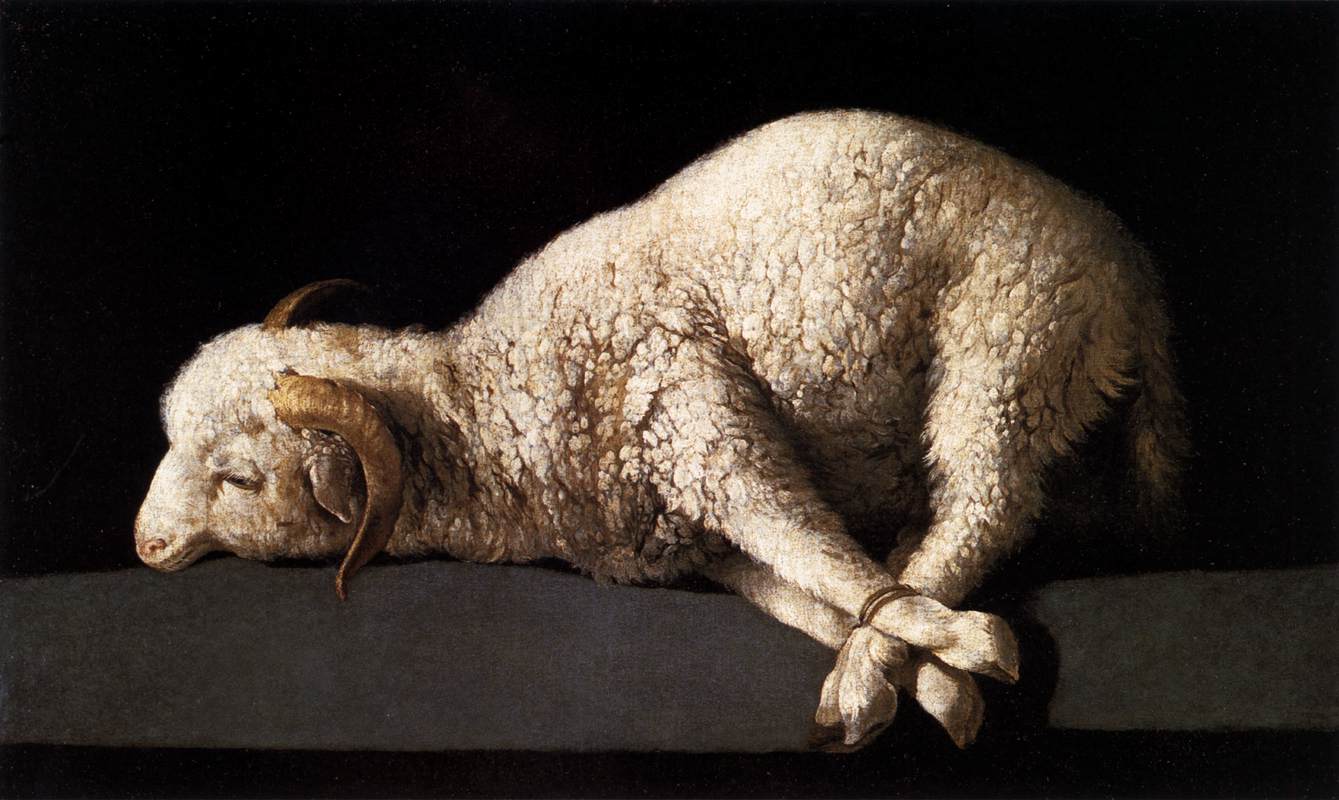
The lamb is symbolic of Jesus, who was sacrificed for the sins of the world. The blood of the Lamb of God delivered all who believe from death and the bondage of sin.

And by that will, we have been made holy through the sacrifice of the body of Jesus Christ once for all. Hebrews 10:10

And so Jesus also suffered outside the city gate to make the people holy through his own blood Hebrews 13:12

For Christ died for sins once for all, the righteous for the unrighteous, to bring you to God. He was put to death in the body but made alive by the Spirit, 1 Peter 3:18


~ The Bread of Affliction (unleavened bread) ~

Old Testament meaning:

This bread commemorates when the Jewish people left Egypt in a hurry and did not have time to let their bread rise:


With the dough they had brought from Egypt, they baked cakes of unleavened bread. The dough was without yeast because they had been driven out of Egypt and did not have time to prepare food for themselves. Exodus 12:39


Do not eat it with bread made with yeast, but for seven days eat unleavened bread, the bread of affliction, because you left Egypt in haste—so that all the days of your life you may remember the time of your departure from Egypt. Deuteronomy 16:3


On the day before Passover (preparation day; also sometimes referred to as the First Day of Unleavened Bread), all leaven in homes was to be searched out and burned - this was in remembrance of departure from Egypt.

So you shall observe the Feast of Unleavened Bread, for on this same day I will have brought your armies out of the land of Egypt. Exodus 12:17

In the first month, on the fourteenth day of the month at evening, you shall eat unleavened bread, until the twenty-first day of the month at evening. For seven days no leaven shall be found in your houses, Exodus 12:18-19


According to Jewish calendar, a day begins at sundown - this means that the leaven would have been burned around mid-morning on preparation day and Passover would begin after the sun had set.

Traditionally three peaces of unleavened bread were served at Passover. The middle piece is broken in half and is eaten after the meal (this is called Afikoman in Hebrew).

There is some speculation as to why there are three pieces of matzah. Some suggest that they represent Abraham, Isaac and Jacob. Why then is the middle matzah (representing Isaac) broken in half? Does this suggest the binding of Isaac by Abraham? Is so, this is a clear allusion to the sacrifice of Jesus, since the first occurrence of the world love in the Scriptures (Gen 22:2) refers to a father’s love for his “only” son who was offered as a sacrifice on Moriah (the very place of the crucifixion of Jesus), a clear reference to the gospel message (John 3:16). Consider how this provides a prophetic picture of the Lord Jesus as the “Lamb of God” who takes away the sins of the world. Both Isaac and Jesus were born miraculously; both were “only begotten sons”; both were to be sacrificed by their fathers at Mount Moriah; both willingly took up the means of his execution; and both demonstrate that one life can be sacrificed for another - the ram for Isaac, and Jesus for all of mankind.

This afikomen ritual has been a part of the Passover ceremony since Second Temple times and would have been part of the Passover during the time of Jesus. The Greek word aphikomenos means “he is coming” and has Messianic overtones.

In Jewish custom, the middle piece is broken in half and the large of the two broken pieces if carefully wrapped in linen. The little children are asked to close their eyes and the piece is hidden somewhere in the room. As the seder progresses, the children are encourage to search for the lost piece. Once it is found, the child receives a small reward and a small piece of matzah is given to each person at the table to eat.


New Testament meaning:

Leaven causes bread to “puff” up & be full - sin causes man to be prideful, “puff” up & be full of himself. Unleavened bread is flat bread that contains no leavening agent, and symbolizes the absence of sin.


Therefore let us keep the Festival, not with the old yeast, the yeast of malice and wickedness, but with bread without yeast, the bread of sincerity and truth. 1 Corinthians 5:8

Jesus replied, "I tell you the truth, everyone who sins is a slave to sin. John 8:34


The three matzah represent the Father, Son, & Holy Spirit. As in Jewish tradition, the middle piece is broken and is a picture of the suffering of Jesus. Just as leaven represents sin, unleavened bread represents Jesus, who was born without sin. We partake of unleavened bread to symbolize our acceptance and gratitude for the Messiah's broken body:


He himself bore our sins in his body on the tree, so that we might die to sins and live for righteousness; by his wounds you have been healed. 1 Peter 2:24


As in Jewish custom, half of the broken middle piece is carefully wrapped in linen and hidden and to be found after the meal by the little children, who then receive a small reward upon finding the broken piece of unleavened bread. This is an image of death, burial and resurrection of Jesus from the dead. Only after partaking of the Lamb of God who was slain for our transgressions do we understand and take hold of the reward given to those who seek for Him. See: Matthew 18:3; Matthew 19:14; Jeremiah 29:13

~ Bitter Herbs (Maror) ~

Old Testament meaning:

Bitter Herbs is usually fresh ground horseradish, however sometimes romaine lettuce or a plate of bitter vegetables such as radishes, parsley, and celery are served instead. These bitter herbs symbolize the bitterness of Egyptian slavery. Some prefer mild horseradish, although others say that it doesn't serve its purpose (to remind us of the bitterness of slavery) unless it's hot enough to bring tears to the eyes.

The fourteenth day of the second month at even they shall keep it, and eat it with unleavened bread and bitter herbs. Numbers 9:11

And they shall eat the flesh in that night, roast with fire, and unleavened bread; and with bitter herbs they shall eat it. Exodus 12:8

They made their lives bitter with hard labor in brick and mortar and with all kinds of work in the fields; in all their hard labor the Egyptians used them ruthlessly. Exodus 1:14


New Testament meaning:

Among believers, bitter herbs symbolize the bitterness of sin, and a life without Jesus.

For I see that you are full of bitterness and captive to sin." Acts 8:23


For Passover in our home, we eat horseradish as bitter herbs. My husband prepares his own homemade horseradish. He skins the root and uses a grater to shred until it is finely ground. Horseradish will continue to get more pungent as it sits - getting hotter and hotter until the flavor eventually becomes very bitter. The next step is important, and very revealing. To properly “finish” horseradish and prevent it from becoming overwhelmingly pungent, you need to finish it with a little vinegar. Now, with this process in mind, read this scripture:

Later, knowing that everything had now been finished, and so that Scripture would be fulfilled, Jesus said, “I am thirsty.” A jar of wine vinegar was there, so they soaked a sponge in it, put the sponge on a stalk of the hyssop plant, and lifted it to Jesus’ lips. When he had received the drink, Jesus said, “It is finished.” With that, he bowed his head and gave up his spirit. John 19:28-30


Just as vinegar finishes the sting of horseradish, Jesus’ last step before his Passover sacrifice was to taste vinegar. With this, Jesus said, “It is finished”… The sting of sin has been quenched forever!